Heritage · Évora, Alentejo
Água de Prata Aqueduct
Renaissance water engineering across Évora
Discover Água de Prata Aqueduct
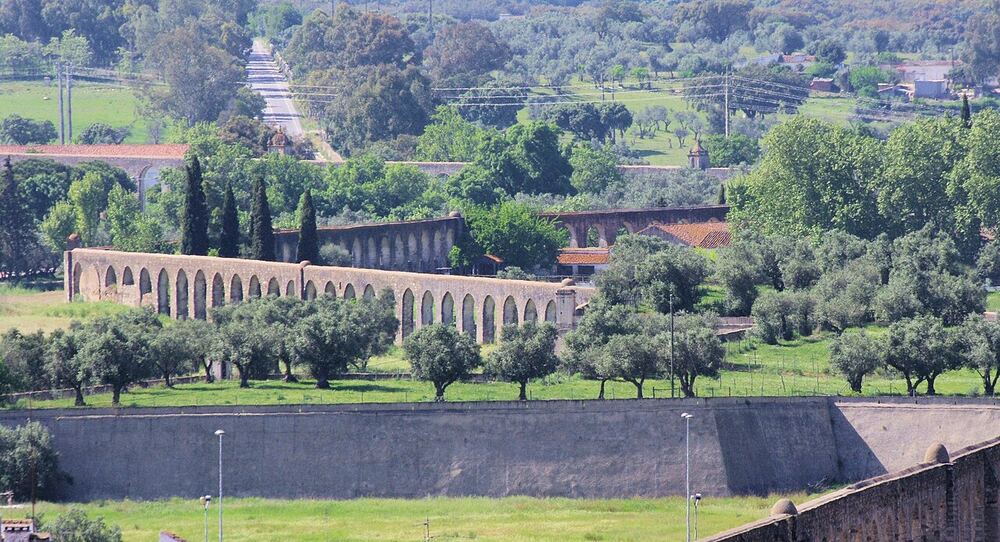
The aqueduct is both an engineering work and a feature of the urban landscape. Its arches appear in different settings, from the city’s streets to the surrounding countryside.
Management and conservation
The Municipality of Évora carries out heritage maintenance and enhancement; individual sections may be under works.
How to plan your visit
Choose a particular section to see in 30–60 minutes; the aqueduct is extensive and has no single visitor entrance.
Why this place stands out
- The repeating arches and changes in height
- Sections absorbed into the urban streetscape
- The Renaissance water structure on Rua Nova de Santiago
Place facts and transport
- Place
- Água de Prata Aqueduct
- Location
- Rua Nova de Santiago is one useful starting point in Évora, Portugal; the aqueduct extends over several locations.
- Suggested duration
- Choose a particular section to see in 30–60 minutes; the aqueduct is extensive and has no single visitor entrance.
- Opening and entry
- Visible exterior sections can be viewed from public roads; protected sections have separate access rules.
Opening hours and access
Visible exterior sections can be viewed from public roads; protected sections have separate access rules.
Tickets and prices
Viewing from public streets is free; special organised access may differ.
Getting here
Walking in the old town
Rua Nova de Santiago is one useful starting point in Évora, Portugal; the aqueduct extends over several locations.
Driving and parking
The old town has narrow streets and driving restrictions. Check authorised public parking areas and complete the approach on foot.
Public transport
Use regional services to Évora, check current timetables and connections, and walk the final stretch to the monument.
Heritage and cultural context
Inaugurated on 28 March 1537, the aqueduct formed part of a major sixteenth-century water-supply project and has changed through successive repairs and adaptations.
Compare the height and rhythm of the arches, urban sections and the Renaissance water structure in Rua Nova de Santiago.
Before you enter
Use a long view to show the rhythm of the arches. Stay on safe pavements and public ground.
Visible exterior sections can be viewed from public roads; protected sections have separate access rules.
Getting here
The historic centre is best explored on foot. Narrow lanes, old paving and traffic restrictions make it useful to confirm the pedestrian approach on the map. Check transport services for longer journeys to Évora.
Rua Nova de Santiago is one useful starting point in Évora, Portugal; the aqueduct extends over several locations.
Visitor ratings and reviews
Explore recent visitor ratings and experiences for this monument on Google Maps.
View current Google Maps reviews ↗Where to stay for this area
For a walking itinerary, consider accommodation in Évora’s historic centre or near pedestrian access points. Check the actual walking distance and parking conditions if arriving by car.
History
Inaugurated on 28 March 1537, the aqueduct formed part of a major sixteenth-century water-supply project and has changed through successive repairs and adaptations.
Architecture and setting
Compare the height and rhythm of the arches, urban sections and the Renaissance water structure in Rua Nova de Santiago.
What to look for
- The repeating arches and changes in height
- Sections absorbed into the urban streetscape
- The Renaissance water structure on Rua Nova de Santiago
Practical information
Location and access
Rua Nova de Santiago is one useful starting point in Évora, Portugal; the aqueduct extends over several locations.
Opening and access
Visible exterior sections can be viewed from public roads; protected sections have separate access rules.
Tickets and prices
Viewing from public streets is free; special organised access may differ.
Visit duration and advice
Choose a particular section to see in 30–60 minutes; the aqueduct is extensive and has no single visitor entrance.
Suggested walking route
- 1
Begin near the water structure on Rua Nova de Santiago
- 2
Follow public streets beside one visible aqueduct section
- 3
Return through the historic centre without entering restricted areas
Photography and responsible visiting
Use a long view to show the rhythm of the arches. Stay on safe pavements and public ground.
Frequently asked questions
Can I include Água de Prata Aqueduct on a walking itinerary?
Choose a particular section to see in 30–60 minutes; the aqueduct is extensive and has no single visitor entrance. Rua Nova de Santiago is one useful starting point in Évora, Portugal; the aqueduct extends over several locations.
What should I verify before visiting?
Visible exterior sections can be viewed from public roads; protected sections have separate access rules. Viewing from public streets is free; special organised access may differ.
Map and sources
Rua Nova de Santiago is one useful starting point in Évora, Portugal; the aqueduct extends over several locations.
Keep exploring Évora
Roman Baths of Évora
Ancient public baths beneath the Town Hall
Church of Saint Vincent, Évora
A neighbourhood church linked to the tradition of Évora’s martyrs
Évora Public Garden
Romantic landscaped walks and historic follies
Portas de Moura Fountain
A Mannerist fountain in Évora’s historic streets
Church of the Holy Spirit of Évora
A Mannerist church with Jesuit architectural roots
Palace of the Dukes of Cadaval
Noble residence and medieval towers beside the Roman Temple
Church of Mercy of Évora
Narrative tiles and gilded Baroque carving
Chapel of Saint Blaise
Late Gothic chapel beyond Évora’s medieval walls
Church of Our Lady of Grace
A distinctive Renaissance façade in Évora
Church of the Lóios (Saint John the Evangelist)
Gothic-Manueline details and historic tile panels
College of the Holy Spirit
Historic university cloisters in Évora
Roman Temple of Évora
Corinthian columns above the historic city
Évora Cathedral
A fortified medieval cathedral above the old town
Walls of Évora
Defensive layers around the historic centre
Praça do Giraldo
Évora’s central square and civic meeting place
Chapel of Bones
A powerful reflection on mortality
Church of São Francisco
A monumental church adjoining the Chapel of Bones
Palace of Dom Manuel
Royal history within Évora’s public garden
National Museum Frei Manuel do Cenáculo
Art and archaeology beside the Roman Temple
Church of Santo Antão
The church facing Praça do Giraldo